Blog

All Is Well
In every moment, each of us has a basic decision to make about our well-being. No matter how terrible, worrisome, or even frightening the circumstances are, the question we are called on to answer is whether we will face it with calmness, assurance, and knowing that we are okay, that all is well. Certainly there is trouble in the world. In fact, it is largely what we focus on. We think about what is ...

The Goodness of Sadness and Grief
We all suffer losses in life. Relationships don’t work out. We lose a loved one who passes on. Some of us even endure the death of a child. Even losing a pet can be hard. How do we deal with loss, when things do not work out the way we wanted or expected? After the initial shock, sadness and grief set in, and we are not always good at handling them. The first thing ...

The Shadow and Light in Yourself
There is no shadow without the light. We know this to be true when we see a shadow cast on the ground. I believe that this aphorism is true for each of us humans as well. When we look at ourselves, we all too often see our faults and think of ourselves as inadequate or unlovable. Our negative self-talk sees ourselves as not good enough, unworthy, unlovable, stupid, not mattering, nothing, bad, or even ...

Why Do We Complain?
Human beings love to complain. Why is this? After all, we want to be happy, but complaining generally keeps us in a bad mood. There are a half dozen reasons that we complain, and the bad news is that two-thirds of them keep us feeling badly. Even complaining for a “good” reason must be done without crossing into negative motivations, or we condemn ourselves to negativity. So here are the half dozen reasons ...

Do You Worry Instead of Sleep?
Do you worry instead of sleeping at night? Do you have difficulty turning off your mind and lie in bed with concerns about the previous day or the day coming up? This is one of the most common complaints I hear from clients. Their thoughts race while they are in bed, and they cannot fall asleep. Even if you generally sleep well, there may be times when you wake up, worry about something, and ...

Find the Good in All Things
Finding the good in all things is something that can transform anything and everything in life. I am amazed when I run across people who have the ability to do this, without being Pollyannaish. They are teachers to me, and I wish to pass on their wisdom to you. Let me describe these amazing people. When something adverse happens, or what most of us would consider adverse, they come up with a different way ...

Understanding the Opposite Sex, Part 3
This month, we will look at three differences in romantic and sexual intimacy, the third installment on differences between men and women. . Some of the ideas here might seem old fashioned, and they may not pertain to every relationship. At the same, many things do not seem to change through time in how men and women differ. Difference #1. Men tend to focus more on physical interaction and sex. Women tend to focus ...
Understanding the Opposite Sex, Part 2
This month I look again at the fascinating ways in which men and women are different. I highlight three cognitive and psychological differences that, if understood, can improve relationships. The distinctions I make are generalities, but you can apply them to your relationships and see if they make sense to you. Difference #1. Men tend to be solution-oriented. Women tend to be process-oriented. This difference comes shining forth when a problem arises, whether it ...

Understanding the Opposite Sex, Part 1
How men and women are different causes endless consternation and debate—including how we believe our partners should think and be. Today and in the next two blog posts, I am going to talk about the fascinating ways in which we differ as men and women. Before I get into it, let me say that I will state generalities about men and women. If you do not think that you or your partner fits any ...
Finding the Relationship for You
With Valentine’s Day coming up, I’m going to talk to those of you who are seeking an intimate relationship but are not in one now. I am going to give you three keys to finding the right relationship for you. The first is growing more whole in yourself. We have all heard that expecting another to complete ourselves is not a good way to form a relationship. Two whole people make the possibility of ...

Embracing Adversity
Most of us have something with which we are struggling or we would like to be different. In a word, adversity arises, and we have to decide what to do. One’s attitude toward adversity can make all the difference in the world. To address what to do with adversity, it may help if you can think of a difficulty that you are facing right now. What adversity are you facing in your life? If ...

Life’s Been Good to Me
Life’s been good to me. It hasn’t given me what I wanted, but it has been good to me. I think of this when I start believing that I should have things that I don’t. How about you? Most of us are pretty good at knowing what we don’t have and think we want in life. And we live in an age when thousands of self-improvement experts, life coaches, spiritual guides, motivational speakers, and ...

I Can’t Do It All
“I can’t do it all!” Have you ever said this to yourself? "Overwhelm" seems common these days. So I want to discuss the idea that “I can’t do it all,” and the disempowerment that goes with it. There are so many demands on us—work, children, keeping up our homes, trying to stay healthy, extracurricular activities, and possibly elderly parents to care for. And these are just the broad categories. We especially get overwhelmed when ...

The Best Way to Change Your Partner
What is the best way to change your partner? Why do I ask this question? Well, after we have been in a relationship for a while, we seem to start wishing that our partners were different in one way or another. After that great time at the beginning of a relationship in which our partners seem perfect and they think we are perfect for them, we start to find things that we don’t like ...

How Are You at Releasing Potential Good?
This month my topic is about letting go of old intentions to do something that no longer serves us. You will learn that it is okay to let go of potential good in our lives for other potential good to come in. There seem to be two types of people. There are those who have ideas and projects that come to their minds, and they may start working on some of them. However, they ...
Are You Successful?
Are you successful? In Western culture, people certainly center on this question. Indeed, around the world a focus on success has risen to new heights. Whether you define it as financial success, relationship success, success at power and influence, the success of fame, the success shown in possessions, or whatever other type of success you might think of, we seem always to be going after something. Even in the realms of self-improvement or helping ...

It’s Not True That Fear Is
“It’s not true that fear is.” This is a saying that I invented over 10 years ago to remind myself that I fabricate my fear. Fear ultimately is an apparition, something groundless, something that does not exist beyond what my mind creates. Fear seems to be all around us. Just look at what we are currently dealing with as a society: A pandemic that has devastated families and economies Political divisions that pit friends, ...

Be Happy Now
A major way that we keep ourselves from happiness is by believing that we need to accomplish a bunch of tasks or achieve a goal before we can be happy. Life does not have to be this way. The list of things I think I have to do is often a mile long, with things great and small. Promote my practice, do my billing, get my home in order, do the wash, read my email, ...
Seeing Yourself As Others See You
A quotation in a little book called Friends No Matter What is attributed to Barbara Billingsly, and it goes like this: My friend, if I could give you one thing, I would wish for you the ability to see yourself as others see you. Then you would realize what a truly special person you are. I like this quotation, because it calls on us to look at ourselves from a different perspective. Most of ...

It Doesn’t Matter What You Do
Life has a lot to offer when we stay in the right frame of mind. This is the story of how I came to understand this, and I coined the phrase: It doesn’t matter what you do. It matters how you do it. Pressures in life make us think that we have to do so many things. We think the results matter most. We think it is by our doing that we get to ...
Have You Ever Said, “Why Me?”
When things are not going your way, have you ever asked yourself, “Why me?” Well, years ago, a saying came to me about this question, “Why me?” I’ll share it with you today: People say, “Why me?” And then they don’t answer the question. We all have said, “Why me?” So what do I mean when I say people don’t answer the question? Well, let’s take a look. Life does have its tragedies and ...
To Love Another and To Love Oneself
For Valentine’s Day, it is time to talk of love. What does it mean to love another and how can we better love ourselves? I have heard that love is a decision, that it is a commitment, and it has been called many other things. But I think love involves a way of beholding another that includes several features, including the sentiment that arises from how we behold the other. First, I think love ...

Never Make a “To Do” List Again
What is on your “to do” list today? Some people are avid makers of “to do” lists, whereas others depend on keeping what they want to do in their heads. Regardless of your style, today I tell you, “Never make a ‘to do’ list again!” How can I say this? Even I occasionally make lists of tasks for my day. I do not do this every day, because most often I depend on my ...

When a Loved One Dies
Recently, someone I have known for a long time died. I draw on this experience as well as my knowledge as a therapist to address any similar occasion you may have had. When a loved one dies, many thoughts and feelings arise. Grief, disbelief, loneliness, regrets, guilt, fears, and even thoughts about new beginnings are all possible. Coping with them becomes as important as all the arrangements and daily tasks one must do. Grief may be the ...
Report from the Home Front during COVID-19
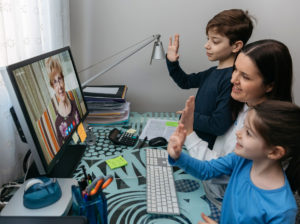
As a therapist, I regularly have the privilege of coming into and sharing your lives. Recently, I have also had the privilege of coming into your homes through online telehealth, as the coronavirus emergency continues. So I thought I would share a general view of how we are doing. I get a view of various people, from those who are working at home, to those who still have to go to work one or more days ...
Four Easy Steps to New Habits
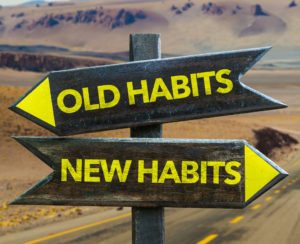
Have you made any New Year’s resolutions? Most likely not. Few people seem to make New Year’s resolutions anymore. The conventional wisdom is that it is no use to make New Year’s resolutions, because 90% of them are broken within three weeks anyway. The fact of the matter is that changing ourselves can be hard. So this month’s post is on Four Easy Steps to New Habits. We all have things we want to change in our lives, ...

Let the Saw Do the Work
Once, when I was 8 or 9 years old, I was in the garage attached to the house I grew up in. I was sawing a piece of wood with a handsaw. I learned something that day that I see as a metaphor for keeping a calm, centered mind as I work at tasks these days. I was sawing for some boyhood project. I really don’t remember what. Whatever the wood was destined for, I remember it being ...

That Wasn’t in the Catalog!
I had a conversation years ago with someone about how life doesn’t always turn out how we thought it would. We have expectations about how we thought things would go, about what we would do, about what we would have, about whom we would be with, about how things would be once we accomplished something we had worked for. And it doesn’t turn out that way! Instead we get something else. As I was talking ...

The Four Stages of Change
Change is something we all want in some fashion, but we find so difficult to make happen. Today I’m going to discuss with you the four stages of change. Knowing where you are in the changes you want to make can help you to move forward. The four stages to change are: The Unawareness StageAwareness with No ActionAwareness with Awkward ActionAwareness with Easy Action The first stage is the Unawareness Stage. In this stage, ...

Go for It
For most of us, there are things we would like to have in our lives that we do not. Getting these things takes some effort or a change in how we are doing things. Whether it is the coming of a New Year, an event in our lives that sparks a desire for change, or simply getting tired of the same old routine, renewal seems to be a part of our human nature. If that ...